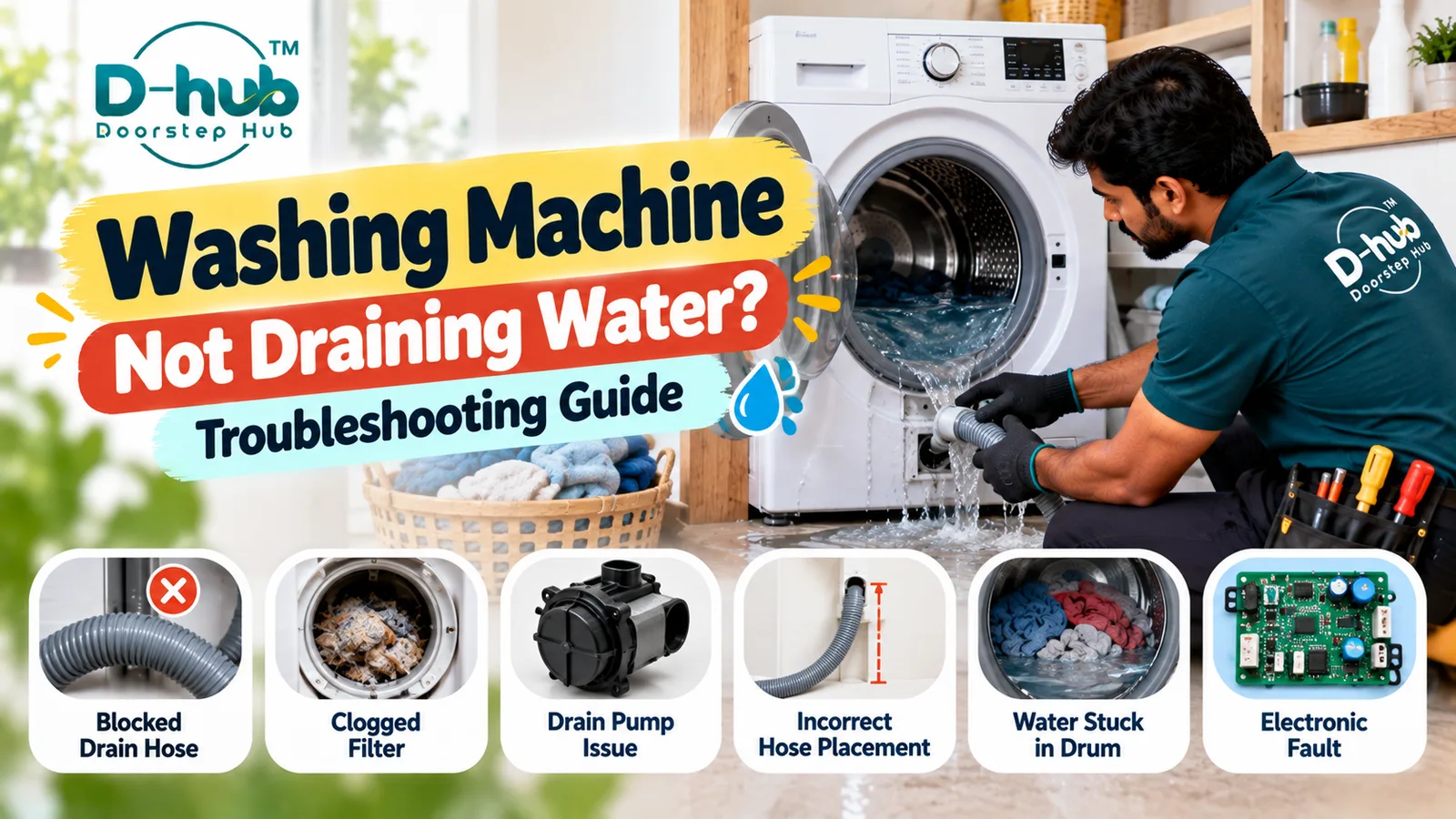
A washing machine that does not drain water properly can interrupt the wash cycle and leave clothes sitting in dirty or soapy water. You may notice water remaining inside the drum after the cycle finishes, the machine stopping before the spin cycle, unusually slow drainage, an error code on the display, or water not leaving the appliance at all. In some cases, the cause may be relatively simple, such as a kinked drain hose or an accessible filter obstruction. In other situations, the problem may involve the drain pump, electronic controls, sensors, or another internal component.
Common causes of washing machine drainage problems include a blocked drain hose, clogged filter, drain-pump problem, incorrect hose positioning, drainage obstruction, or electronic fault. Doorstep Hub brings you this practical troubleshooting guide to help you understand why your washing machine may not be draining, which basic checks you can safely perform, and when professional washing machine repair assistance may be required.
Why Is My Washing Machine Not Draining Water?
Before the washing machine can complete certain stages of a wash cycle, used water needs to leave the drum through the drainage system. If water cannot flow out correctly, the machine may stop, refuse to spin, or display an error.
Common causes can include:
- Blocked drain hose
- Kinked or incorrectly positioned hose
- Clogged drain filter
- Drain-pump problem
- Foreign objects in accessible drainage areas
- Drainage-system obstruction
- Sensor or electronic fault
- Control-board problem
The correct solution depends on identifying where the drainage process is being interrupted.
1. Switch Off the Washing Machine Before Checking It
Safety should come first whenever you inspect a washing machine with a drainage problem.
Switch off the appliance before checking accessible filters or hoses. Follow the manufacturer's instructions regarding disconnection from the electrical supply before performing user-accessible maintenance.
Remember that water may still be present inside the drum or drainage system.
Do not remove electrical panels or access internal wiring unless you are appropriately qualified.
2. Check the Drain Hose for Blockages
The drain hose carries used water away from the washing machine.
A restriction in this hose can prevent or slow normal drainage.
Check the accessible portion of the hose for:
- Visible bends
- Kinks
- Crushing
- Obstructions
- Incorrect positioning
- Visible damage
Straighten an obviously kinked hose only when it can be done safely and according to the manufacturer's instructions.
Avoid dismantling inaccessible drainage components yourself.
3. Check Whether the Drain Hose Is Positioned Correctly
Incorrect drain-hose placement can sometimes interfere with normal drainage.
The correct installation height and positioning depend on the washing-machine model and drainage arrangement.
Check the manufacturer's installation instructions rather than guessing the correct hose position.
If the drainage problem started after installation, relocation, or moving the washing machine, hose positioning should be one of the areas checked.
4. Inspect the Accessible Drain Filter
Some washing machines have a user-accessible drain or pump filter that can collect lint, fibres, coins, buttons, and other small objects.
A heavily obstructed filter may restrict water flow.
Before accessing the filter:
- Switch off the washing machine.
- Follow the manufacturer's instructions.
- Be prepared for residual water.
- Never force the filter open.
- Avoid opening components that are not intended for user maintenance.
If your washing-machine manual does not identify the filter as user-accessible, arrange professional assistance instead.
5. Why Is Water Still Inside My Washing Machine?
If a significant amount of water remains inside the drum after the cycle, the drainage system may not be functioning normally.
Possible causes include:
- Drain-hose blockage
- Filter obstruction
- Drain-pump problem
- Drainage restriction
- Electronic or sensor fault
Avoid repeatedly starting new wash or spin cycles when the machine is unable to remove existing water.
The underlying drainage problem should be identified first.
6. Can a Drain-Pump Problem Stop the Machine From Draining?
Yes. The drain pump is responsible for helping remove water from the washing machine during the appropriate stages of the cycle.
If the pump is obstructed, damaged, or develops another fault, water may drain slowly or remain inside the machine.
Possible symptoms can include:
- Water remaining in the drum
- Unusually slow drainage
- Abnormal sounds during draining
- Cycle stopping before completion
- Drain-related error codes
Drain-pump diagnosis or replacement generally requires professional inspection.
7. Why Won't My Washing Machine Spin When It Isn't Draining?
Drainage and spinning are closely connected in many washing machines.
The machine may prevent high-speed spinning when it detects that water has not drained properly.
If your washing machine is both not draining and not spinning, address the drainage issue first rather than assuming that the spin system has a separate fault.
Once proper drainage is restored, the spin cycle can be reassessed.
8. Electronic Faults Can Also Affect Drainage
Modern washing machines rely on sensors and electronic controls to manage water levels, drainage, cycle timing, and other functions.
If the hose and accessible filter appear clear but the machine still does not drain, the problem may involve:
- Water-level sensor
- Drain-pump electrical circuit
- Wiring
- Control board
- Other electronic components
These components should be tested by a trained technician rather than replaced based only on symptoms.
9. Don't Remove Washing Machine Panels Yourself
Basic troubleshooting should remain limited to components designed for safe user access.
Unless appropriately qualified, avoid:
- Removing external or internal panels
- Handling electrical wiring
- Testing electrical components
- Opening the drain pump assembly
- Repairing the control board
- Bypassing sensors or safety mechanisms
Washing machines combine water, electricity, and moving mechanical components, making correct repair procedures especially important.
10. Don't Ignore Repeated Drainage Problems
If the washing machine drains occasionally but repeatedly develops the same problem, the underlying cause should be investigated.
Repeated drainage problems may be associated with:
- Recurring hose obstruction
- Filter buildup
- Drain-pump problems
- Incorrect hose installation
- Sensor faults
- Electronic control problems
Professional diagnosis can help identify the actual cause instead of repeatedly restarting the machine.
When Should You Call a Washing Machine Technician?
Consider professional washing machine inspection when:
- Water remains inside the drum
- The washing machine does not drain at all
- Water drains unusually slowly
- The machine stops before spinning
- The drain hose appears clear but the problem continues
- The accessible filter has been checked but drainage does not improve
- The machine makes unusual noises while attempting to drain
- A drainage-related error code appears
- Water leaks from the washing machine
- The drainage problem repeatedly returns
A trained technician can inspect the drain hose, drain filter, pump, drainage system, sensors, electrical connections, and control board to determine the actual cause.
Professional Washing Machine Drainage Repair with Doorstep Hub
If your washing machine is not draining water properly, Doorstep Hub can help you connect with service professionals for washing machine inspection, troubleshooting, maintenance, and repair assistance.
Whether the issue involves a blocked drain hose, clogged filter, drain-pump fault, incorrect hose positioning, sensor problem, or electronic control issue, proper diagnosis can help determine the appropriate repair.
Persistent drainage problems should not be ignored, especially when the machine contains standing water, repeatedly stops during cycles, or cannot proceed to spinning.
Need Washing Machine Repair Support?
📞 Helpline: 8886688666
🌐 Website: doorstephub.com
📲 Doorstep Hub App: Open Doorstep Hub App
Start with safe, user-accessible checks such as the drain hose and manufacturer-approved filter inspection. If the washing machine still does not drain, professional diagnosis is recommended.
Frequently Asked Questions
Common troubleshooting questions answered by our specialists
Was this article helpful?
Your feedback helps us improve our repair guides and service tips.