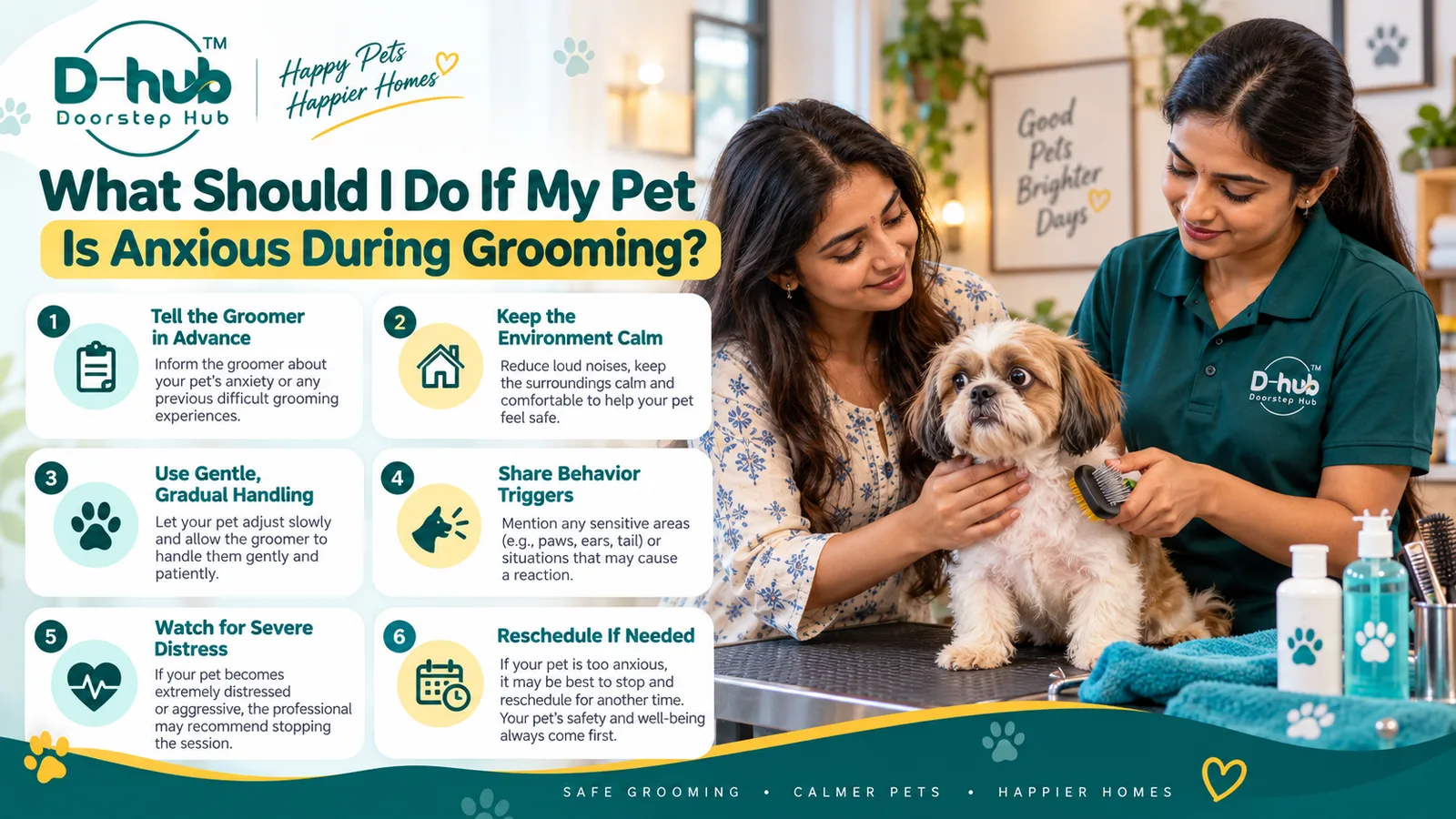
Some pets may feel nervous, uncomfortable, or frightened during grooming, especially if they are unfamiliar with grooming tools, new environments, or being handled by someone they do not know.
When booking through Doorstep Hub, tell the groomer about any known anxiety, fear, or previous difficult grooming experiences before the session begins. Clear information can help the professional plan a calmer and more gradual approach.
1. Tell the Groomer About Anxiety in Advance
If your pet becomes nervous during grooming, inform the professional before the appointment starts.
Useful information may include whether your pet:
- Becomes anxious around unfamiliar people
- Dislikes grooming tools
- Is afraid of dryers
- Becomes restless during bathing
- Does not like nail trimming
- Is uncomfortable with restraint
- Tries to escape during grooming
Do not wait until the pet is already highly distressed before mentioning these concerns.
2. Explain Previous Difficult Grooming Experiences
If your pet has had a difficult grooming experience before, describe what happened.
You may mention:
- Which part of the grooming caused stress
- Whether the pet became frightened or aggressive
- Whether a particular tool caused anxiety
- Whether the session had to be stopped
- Whether breaks helped
- Whether your pet reacted badly to restraint
Past experience can help the groomer understand possible triggers.
3. Identify Known Triggers
Some pets may react strongly to specific sounds, tools, or types of handling.
Possible triggers may include:
- Clippers
- Hair dryers
- Water
- Nail trimmers
- Ear handling
- Paw handling
- Loud noises
- Tight restraint
- Unfamiliar animals nearby
Tell the groomer about known triggers so they can take them into account where practical.
4. Allow Your Pet Time to Settle
Avoid rushing an anxious pet directly into grooming.
Where possible, give your pet some time to become familiar with the environment and professional before intensive handling begins.
A calmer transition may be easier for pets that are:
- Shy
- Easily startled
- Unfamiliar with grooming
- Sensitive to new surroundings
Do not force unnecessary interaction during this settling period.
5. Keep the Environment Calm
A quieter and more controlled environment may help some pets feel more comfortable.
Where practical, reduce unnecessary:
- Loud noises
- Crowding
- Sudden movements
- Excessive handling
- Unfamiliar interactions
For at-home grooming where available, prepare a clean and reasonably quiet area before the professional arrives.
6. Use Gradual Handling
Some anxious pets may respond better when handling is introduced gradually.
The professional may begin with simpler steps before moving to areas or procedures that the pet finds more difficult.
Depending on the pet, this may involve:
- Allowing brief familiarization
- Gentle touching
- Short grooming intervals
- Pauses between steps
- Slower handling
The appropriate approach depends on the individual animal and the professional's judgment.
7. Avoid Forcing the Pet Through Stress
If your pet is clearly becoming increasingly distressed, forcing the grooming process to continue may make the situation more difficult.
Signs of significant distress may include:
- Persistent attempts to escape
- Extreme trembling
- Panic
- Continuous struggling
- Growling
- Snapping
- Attempting to bite
- Inability to settle
Tell the groomer if you notice behavior that is unusual for your pet.
8. Watch for Changes in Behaviour
Pay attention to how your pet responds during the session.
A pet that starts calmly may become uncomfortable during a particular grooming step.
Relevant changes may include:
- Sudden restlessness
- Vocalizing
- Repeated pulling away
- Defensive behaviour
- Strong resistance to certain areas
This information may help identify which part of the service is causing difficulty.
9. Allow Breaks When Appropriate
Some pets may benefit from short breaks during longer grooming appointments.
A brief pause may allow the animal to settle before continuing.
Whether a break is appropriate depends on:
- Pet temperament
- Service type
- Grooming progress
- Professional assessment
Do not assume that a longer session should always continue without interruption.
10. Inform the Groomer About Sensitive Areas
An anxious pet may be particularly uncomfortable with certain body areas being touched.
Tell the groomer if your pet is sensitive around:
- Face
- Ears
- Paws
- Tail
- Belly
- Legs
- Back
This allows the professional to approach those areas more cautiously.
11. Discuss Handling Preferences
If you already know that your pet responds better to a particular approach, explain this before grooming begins.
For example, your pet may respond better to:
- Slow handling
- Minimal restraint
- Short sessions
- Quiet surroundings
- Frequent pauses
Useful information can help the professional better understand the animal.
12. Do Not Punish Anxiety
An anxious reaction is not necessarily deliberate misbehaviour.
Avoid shouting at or punishing your pet for appearing frightened during grooming.
Additional stress immediately before or during the appointment may make handling more difficult.
Focus on calm communication and safe management.
13. Understand That the Service May Need to Stop
In some situations, continuing the grooming session may not be appropriate.
If the pet becomes extremely distressed, aggressive, or difficult to handle safely, the professional may recommend stopping the service.
This may be necessary to reduce the risk of injury to:
- Your pet
- The groomer
- Other people nearby
Stopping a session can sometimes be safer than attempting to complete every grooming step.
14. Rescheduling May Be Recommended
If the grooming cannot be completed safely, the professional may suggest another appointment.
A future session may allow:
- A calmer time of day
- Additional preparation
- A shorter service
- A different approach
- More gradual introduction to grooming
Rescheduling does not necessarily mean the pet cannot be groomed in the future.
15. Consider Shorter Grooming Sessions
For pets that struggle with long appointments, shorter sessions may sometimes be easier to tolerate.
Where appropriate, grooming may be divided into simpler or shorter visits.
Ask the professional whether this approach may be suitable for your pet.
16. Do Not Use Medication Without Veterinary Guidance
If your pet has severe anxiety, do not give sedatives, calming medication, or other drugs solely for grooming unless directed by a qualified veterinary professional.
Medication decisions should be made with appropriate veterinary guidance.
A groomer should not replace veterinary advice for medical management of severe anxiety.
17. Seek Veterinary Advice When Anxiety Is Severe
If your pet regularly experiences extreme distress, aggression, or panic during handling, consider discussing the issue with a veterinary professional.
Veterinary guidance may be particularly useful if:
- Anxiety is severe
- Behaviour has suddenly changed
- Handling is consistently unsafe
- Pain or another medical issue may be involved
Medical or behavioural concerns may require assessment beyond routine grooming.
18. Review the Experience After the Appointment
After grooming, consider what went well and what was difficult.
Keep useful notes about:
- Successful handling methods
- Difficult grooming steps
- Triggers
- Products used
- Whether breaks helped
- Whether the session was completed
This information can be useful for future grooming appointments.
Why Communicating About Pet Anxiety Matters
Every pet responds differently to grooming.
Sharing anxiety and behavioural information in advance can help:
- Prepare the groomer
- Identify possible triggers
- Support slower handling
- Reduce unnecessary stress
- Avoid unsafe situations
- Determine when a session should be stopped
- Improve planning for future appointments
The goal is to complete grooming only when it can be handled appropriately and safely.
Manage Anxious Pet Grooming with Doorstep Hub
Before a Doorstep Hub pet grooming appointment, tell the professional about your pet's anxiety, known triggers, handling preferences, and previous difficult grooming experiences.
A calm environment, gradual handling, and clear communication may make grooming easier for some pets.
If your pet becomes extremely distressed or aggressive, the professional may recommend stopping or rescheduling the service rather than continuing in an unsafe situation.
Need Help with Your Doorstep Hub Pet Care Booking?
📞 Helpline: 8886688666
🌐 Website: doorstephub.com
📲 Download the Doorstep Hub App
Calm preparation and honest information about your pet's behaviour can help create a safer and more manageable grooming experience.
Frequently Asked Questions
Common troubleshooting questions answered by our specialists
Was this article helpful?
Your feedback helps us improve our repair guides and service tips.