How Should I Prepare My Pet for a Grooming Appointment?
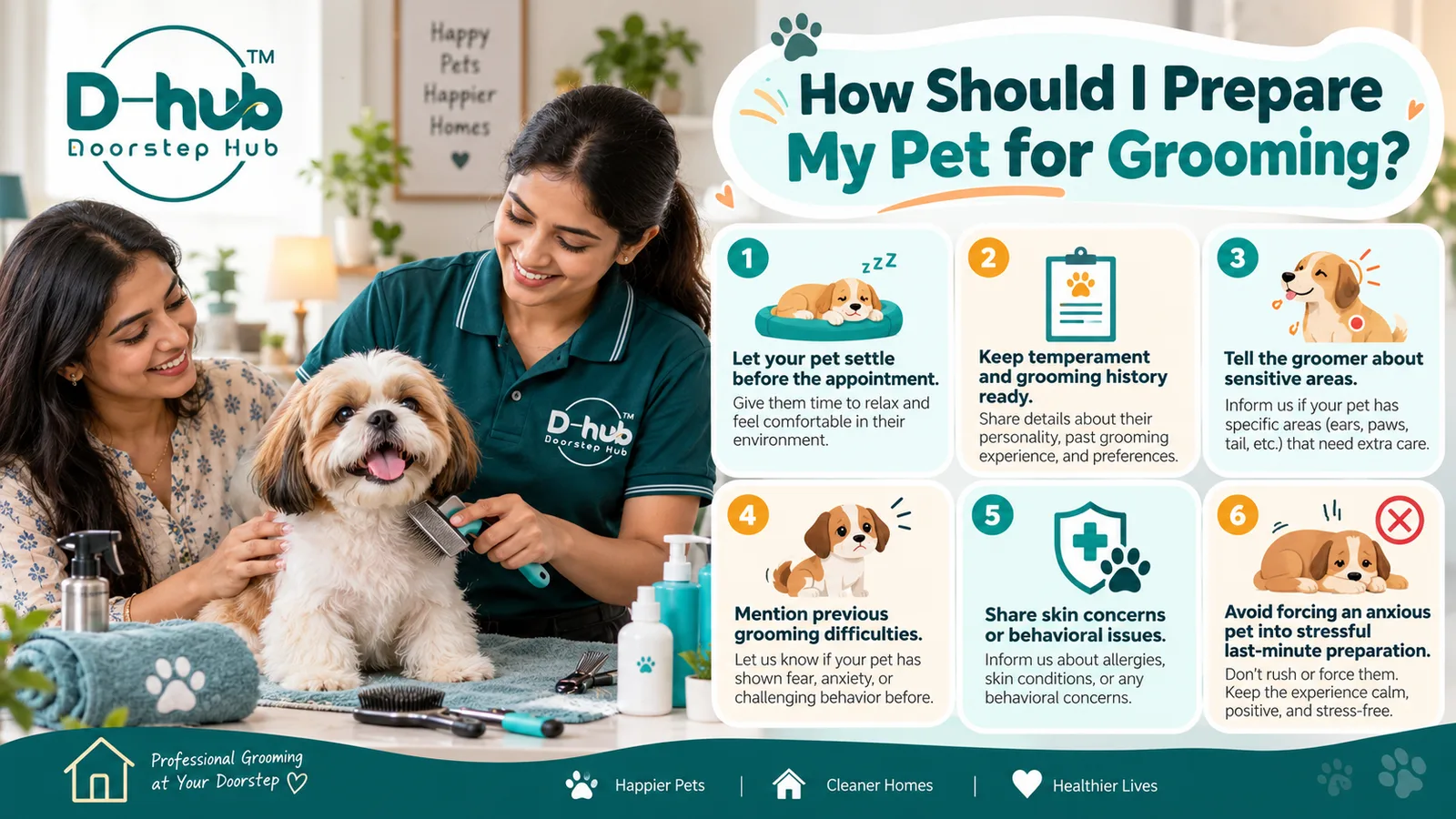
A little preparation before a grooming appointment can help your pet feel calmer and give the groomer useful information before handling begins.
With Doorstep Hub, preparing your pet properly means allowing time to settle, keeping important grooming information ready, and explaining any sensitivity, anxiety, or handling difficulty before the service starts.
1. Give Your Pet Time to Settle
Avoid rushing your pet directly into grooming after an exciting, stressful, or unfamiliar activity.
Before the appointment, allow some quiet time so your pet can settle.
A calmer transition may help reduce unnecessary stress, especially for pets that are:
- Nervous around unfamiliar people
- Sensitive to grooming tools
- Easily overstimulated
- Uncomfortable in new environments
- Anxious during handling
Try to keep the period before the appointment as calm and predictable as reasonably possible.
2. Avoid Stressful Last-Minute Preparation
Do not force an anxious pet through unnecessary handling immediately before the appointment.
For example, avoid repeatedly restraining, brushing, bathing, or trimming your pet at the last moment if this usually causes distress.
Instead, prepare gradually where possible and allow the professional to handle the booked grooming service.
The goal is to help your pet arrive as calm as possible rather than already stressed.
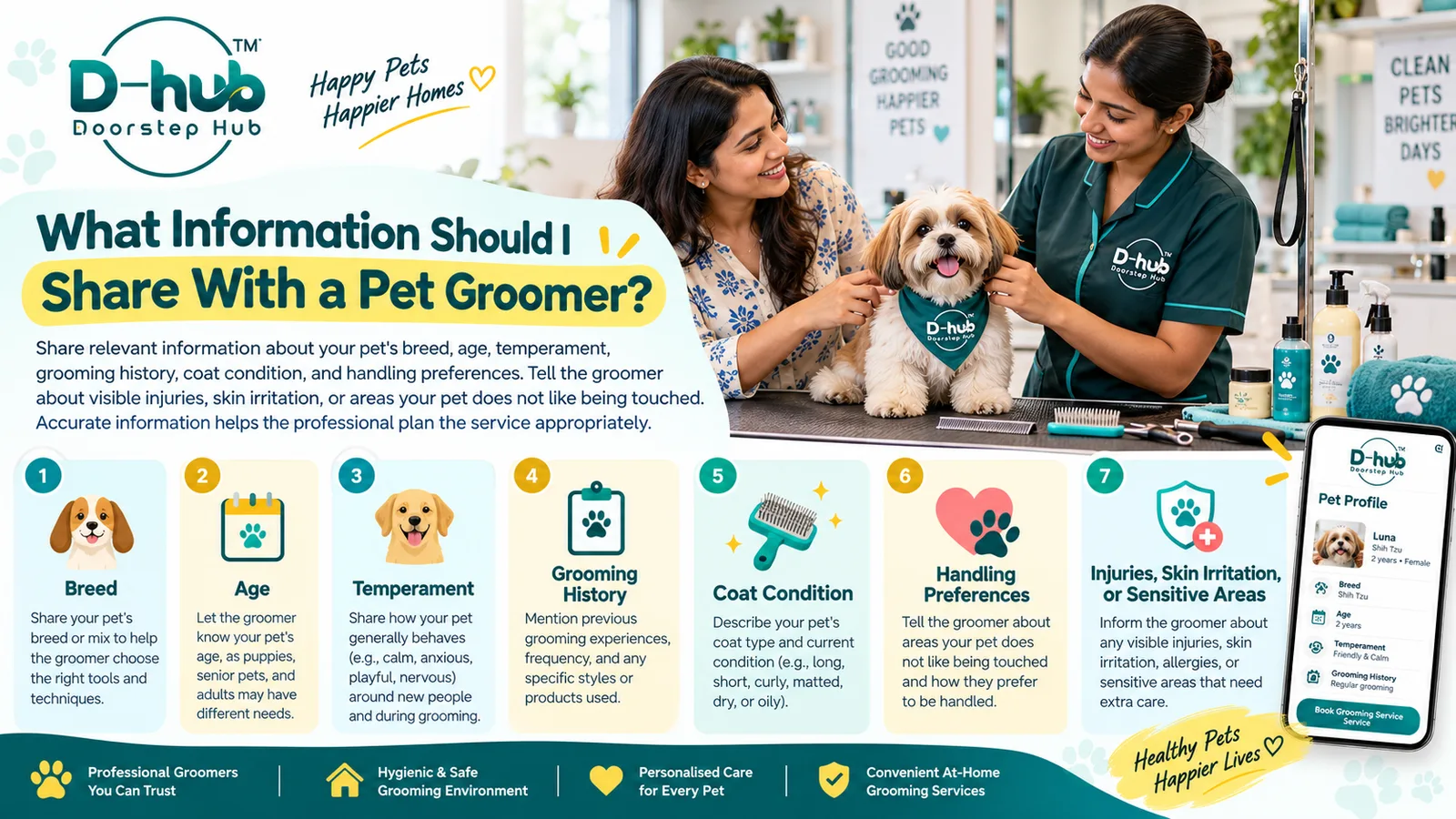
3. Keep Basic Pet Information Ready
Before the groomer begins, have important information available.
This may include:
- Pet type
- Breed
- Age
- Approximate size
- Coat type
- Coat length
- Previous grooming history
Accurate information can help the groomer understand what kind of handling and grooming may be required.
4. Explain Your Pet’s Temperament
Tell the groomer how your pet generally responds to unfamiliar people and handling.
You may mention if your pet is:
- Calm
- Shy
- Nervous
- Highly energetic
- Easily startled
- Uncomfortable with restraint
- Protective of certain areas
This information can help the groomer approach your pet more appropriately.
5. Share Previous Grooming Experience
If your pet has been groomed before, explain how previous appointments went.
Useful information may include:
- Whether your pet tolerated grooming well
- Which parts of grooming were difficult
- Whether your pet disliked particular tools
- Whether your pet became restless
- Whether breaks were needed
- Whether previous grooming caused significant anxiety
Past experience can help the groomer understand what to expect.
6. Mention Sensitive Areas
Some pets may be especially sensitive when certain areas are touched.
Tell the groomer if your pet dislikes handling around areas such as:
- Paws
- Ears
- Face
- Tail
- Legs
- Belly
- Back
Do not assume the groomer will automatically know which areas your pet finds uncomfortable.
7. Tell the Groomer About Handling Difficulties
If your pet has previously reacted strongly during grooming or handling, explain this before the service starts.
Relevant information may include:
- Pulling away
- Attempting to escape
- Growling
- Snapping
- Excessive movement
- Panic around dryers
- Fear of clippers
- Difficulty with nail trimming
Clear information can help the groomer assess how to approach the service.
8. Mention Relevant Skin Concerns
If your pet has visible skin concerns that may affect grooming, tell the professional before treatment begins.
For example:
- Redness
- Dry or irritated areas
- Sensitive skin
- Recent scratching
- Visible sores
- Product sensitivity
For medical skin problems, veterinary advice may be more appropriate than grooming alone.
Grooming services should not be treated as a replacement for veterinary care.
9. Inform the Groomer About Product Sensitivities
If your pet has previously reacted poorly to a grooming product, shampoo, fragrance, or other product, mention this beforehand.
Where relevant, discuss:
- Shampoo sensitivity
- Fragrance sensitivity
- Skin-product reactions
- Preferred products
- Products you want avoided
Do this before products are applied.
10. Explain Coat Problems Honestly
If your pet has coat problems, mention them before the appointment.
These may include:
- Matting
- Tangling
- Heavy shedding
- Dirt buildup
- Sensitive areas
- Previous poor trimming
Do not hide significant coat problems because they may affect the time, technique, and type of grooming required.
11. Keep Your Pet Secure Before the Appointment
Use an appropriate method to keep your pet safely controlled before and during arrival.
Depending on the pet, this may include:
- Leash
- Harness
- Carrier
- Other appropriate restraint
This can help reduce the risk of escape or uncontrolled interactions.
12. Avoid Overstimulating Your Pet
Try to avoid unnecessary excitement immediately before grooming.
Where possible, limit:
- Rough play
- Crowded environments
- Excessive handling
- Loud activity
- Unfamiliar interactions
A quieter lead-up to the appointment may be easier for a nervous animal.
13. Follow Any Provider Preparation Instructions
If the groomer or Doorstep Hub service description provides preparation instructions, review them before the appointment.
These may include guidance about:
- Feeding
- Walking
- Coat condition
- Leash or carrier requirements
- Items to bring
- Other service-specific preparation
Follow the instructions that apply to your booked service.
14. Confirm the Grooming Service Before Starting
Before the groomer begins, confirm the service you booked.
Review:
- Grooming package
- Coat trimming requirement
- Bathing
- Nail trimming
- Ear cleaning
- Other included services
Also remind the groomer of any important temperament or handling information.
15. Discuss What Should Happen if Your Pet Becomes Distressed
If your pet is known to become very anxious during grooming, discuss this with the groomer beforehand.
You may ask how the professional handles situations where a pet becomes too distressed to continue safely.
Do not insist that a grooming service must continue if the animal cannot be handled safely.
16. Keep Communication Clear
Give the groomer concise and useful information rather than waiting until a problem occurs.
Important information may include:
- Temperament
- Previous grooming difficulties
- Sensitive areas
- Skin concerns
- Handling issues
- Product sensitivities
- Coat condition
This can help the groomer plan the service more appropriately.
Why Pet Grooming Preparation Matters
Preparing your pet before grooming can help make the appointment more organized and reduce avoidable stress.
Good preparation can help:
- Give the pet time to settle
- Help the groomer understand temperament
- Identify sensitive areas
- Explain previous grooming problems
- Communicate skin or product concerns
- Improve handling preparation
- Reduce last-minute surprises
The goal is not to force your pet through stressful preparation, but to provide useful information and create a calmer transition into the grooming appointment.
Prepare Your Pet for Grooming with Doorstep Hub
Before a Doorstep Hub pet grooming appointment, allow your pet time to settle and keep important information about temperament, coat condition, and previous grooming experience ready.
Tell the groomer about sensitive areas, handling difficulties, skin concerns, product sensitivities, or behavioral issues that may affect the service.
Most importantly, avoid forcing an anxious animal through unnecessary stressful preparation immediately before the appointment.
Need Help with Your Doorstep Hub Pet Care Booking?
📞 Helpline: 8886688666
🌐 Website: doorstephub.com
📲 Download the Doorstep Hub App
Calm preparation and clear communication can help create a more comfortable grooming experience for both your pet and the professional.
Frequently Asked Questions
Common troubleshooting questions answered by our specialists
Was this article helpful?
Your feedback helps us improve our repair guides and service tips.