
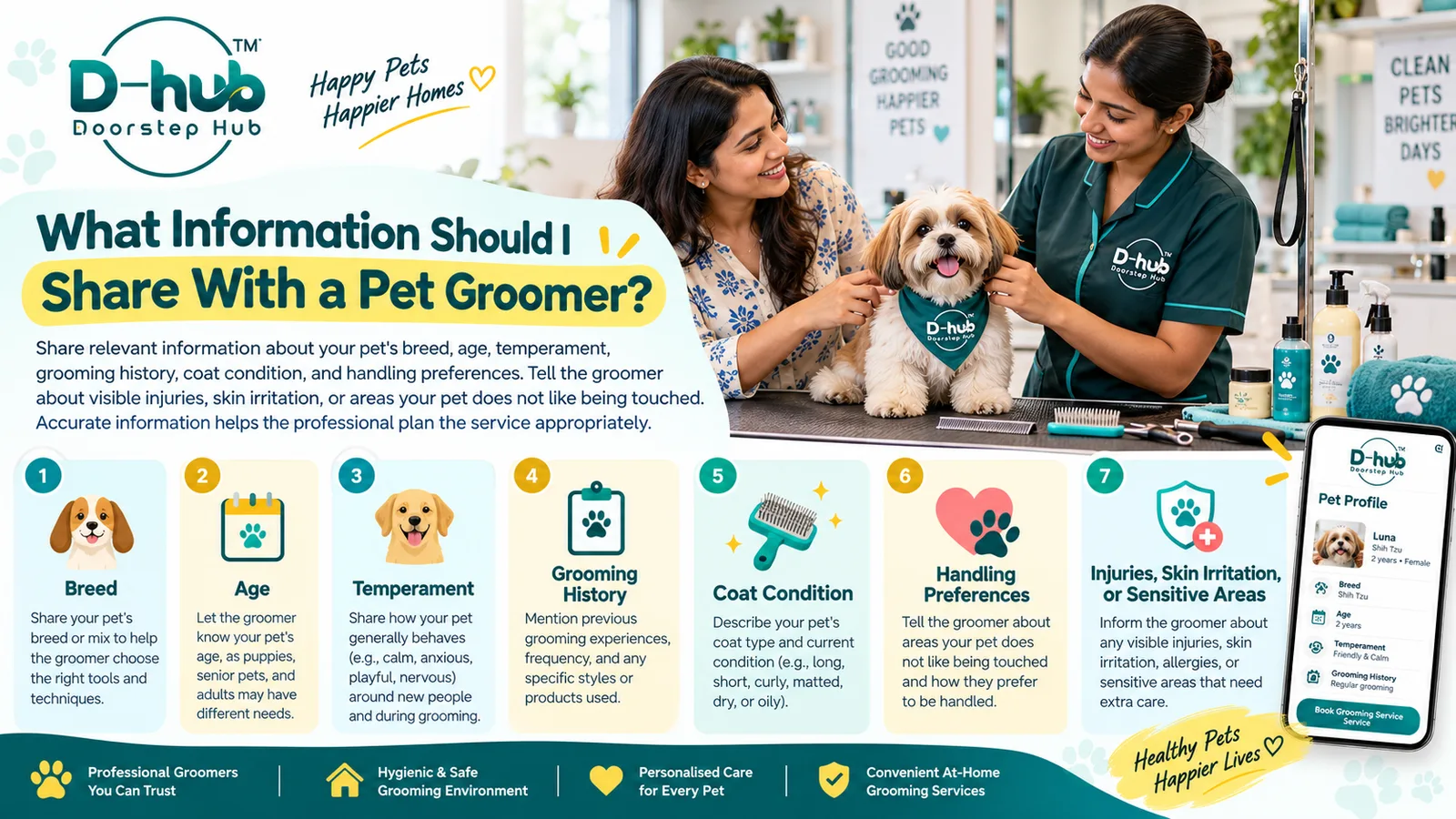
Sharing accurate information before a grooming appointment can help the professional understand your pet’s needs and plan the service more appropriately.
When booking through Doorstep Hub, provide relevant details about your pet’s breed, age, temperament, grooming history, coat condition, sensitivities, and handling preferences before the service begins.
1. Share Your Pet’s Breed
Tell the groomer your pet’s breed or breed type where known.
Breed information can help provide context about:
- Coat type
- Typical grooming needs
- Hair length
- Shedding patterns
- Size
- General grooming approach
If your pet is a mixed breed, describe the coat and size as accurately as possible.
2. Mention Your Pet’s Age
Age may affect how a pet responds to grooming.
Tell the groomer whether your pet is:
- A puppy or kitten
- An adult
- A senior pet
Younger and older animals may require different handling approaches depending on their comfort and experience.
3. Explain Your Pet’s Temperament
Describe how your pet usually behaves around unfamiliar people and during handling.
For example, mention whether your pet is:
- Calm
- Shy
- Nervous
- Easily startled
- Highly energetic
- Uncomfortable with restraint
- Protective of certain areas
This can help the groomer prepare for the appointment.
4. Share Previous Grooming History
Tell the groomer whether your pet has been professionally groomed before.
Useful information may include:
- How often your pet is groomed
- Whether previous appointments went smoothly
- Any difficulty with bathing
- Discomfort with clippers
- Fear of dryers
- Problems during nail trimming
- Any other grooming challenges
Past grooming experience can help the professional understand what your pet may be comfortable with.
5. Describe the Current Coat Condition
Provide accurate information about your pet’s coat before the appointment.
Mention conditions such as:
- Long or short coat
- Heavy shedding
- Tangling
- Matting
- Dry coat
- Dirt buildup
- Recently trimmed coat
- Areas requiring additional attention
Do not hide significant matting or coat problems, as they may affect the service.
6. Mention Handling Preferences
Some pets tolerate certain types of handling better than others.
Tell the groomer if your pet responds better to:
- Gentle handling
- Slow introductions
- Short breaks
- Minimal restraint
- Quiet surroundings
- Specific handling techniques
This information can help the professional plan the grooming process more carefully.
7. Identify Areas Your Pet Does Not Like Being Touched
Tell the groomer if your pet is particularly sensitive around certain areas.
These may include:
- Face
- Ears
- Paws
- Tail
- Legs
- Belly
- Back
Knowing this beforehand can help the groomer approach those areas more cautiously.
8. Tell the Groomer About Visible Injuries
If your pet has a visible injury, inform the professional before grooming begins.
Examples may include:
- Cuts
- Scratches
- Swelling
- Bruising
- Recent wounds
- Tender areas
Avoid allowing grooming to proceed over an injured area without first discussing it.
For injuries that may require medical attention, seek appropriate veterinary advice.
9. Mention Skin Irritation
Tell the groomer about any visible skin issue that may affect the service.
This can include:
- Redness
- Dryness
- Irritation
- Rash-like areas
- Excessive scratching
- Sensitive spots
A groomer may need to avoid or handle these areas differently.
Grooming should not be used as a substitute for veterinary care when a medical skin problem may be present.
10. Share Known Product Sensitivities
If your pet has previously reacted to grooming products, mention this before any product is applied.
This may involve:
- Shampoo
- Conditioner
- Fragrance
- Coat spray
- Cleaning products
- Other grooming products
Where relevant, explain which products or ingredients you want avoided.
11. Mention Behavioral Concerns
If your pet has shown difficult or defensive behavior during grooming or handling, be clear about it.
Relevant behavior may include:
- Growling
- Snapping
- Attempting to bite
- Trying to escape
- Excessive movement
- Panic during restraint
- Strong fear of grooming tools
Do not hide this information.
Accurate behavioral information can help the groomer decide how to handle the appointment more appropriately.
12. Explain Specific Grooming Preferences
Tell the groomer what result you are expecting.
Depending on the service, you may want to discuss:
- Preferred coat length
- Areas to trim
- Areas not to trim
- Nail length
- Hygiene grooming
- Brushing requirements
- Other grooming preferences
Clear instructions can help reduce misunderstandings.
13. Mention Recent Grooming or Treatments
If your pet recently received grooming or another relevant treatment, tell the professional.
This may include:
- Recent haircut
- Recent bath
- Nail trimming
- Coat treatment
- Skin treatment
- Other recent procedures
This can help the groomer understand the current condition more accurately.
14. Share Only Relevant Information
The groomer does not need unnecessary personal information.
Focus on details directly related to:
- Grooming
- Handling
- Coat condition
- Skin condition
- Temperament
- Safety
Avoid sharing unrelated sensitive information.
15. Confirm Important Information Before Grooming Starts
Before the service begins, quickly review the most important points with the groomer.
Confirm:
- Pet details
- Grooming service
- Sensitive areas
- Handling preferences
- Visible injuries
- Skin irritation
- Product sensitivities
- Behavioral concerns
A brief confirmation can help ensure the professional understands your pet’s needs.
Why Accurate Pet Information Matters
Every pet may respond differently to grooming.
Providing accurate information can help:
- Prepare the groomer
- Reduce handling surprises
- Protect sensitive areas
- Identify potential grooming difficulties
- Improve communication
- Clarify grooming expectations
- Support a more comfortable service
The more relevant information the groomer has before beginning, the better they can plan the appointment.
Share Pet Details Clearly with Doorstep Hub
When booking a pet grooming service through Doorstep Hub, share relevant information about your pet’s breed, age, temperament, grooming history, coat condition, and handling preferences.
Tell the groomer about visible injuries, skin irritation, sensitive areas, or any part of the body your pet does not like being touched.
Accurate information helps the professional understand your pet and plan the grooming service more appropriately.
Need Help with Your Doorstep Hub Pet Care Booking?
📞 Helpline: 8886688666
🌐 Website: doorstephub.com
📲 Download the Doorstep Hub App
Clear and accurate pet information can help create a smoother and more comfortable grooming experience.
Frequently Asked Questions
Common troubleshooting questions answered by our specialists
Was this article helpful?
Your feedback helps us improve our repair guides and service tips.