
How Can I Keep Pet Grooming Safe at Home?
Basic grooming at home can be useful for routine pet care, but safety should always come first. Pets may react unpredictably when they are frightened, uncomfortable, injured, or unfamiliar with grooming tools.
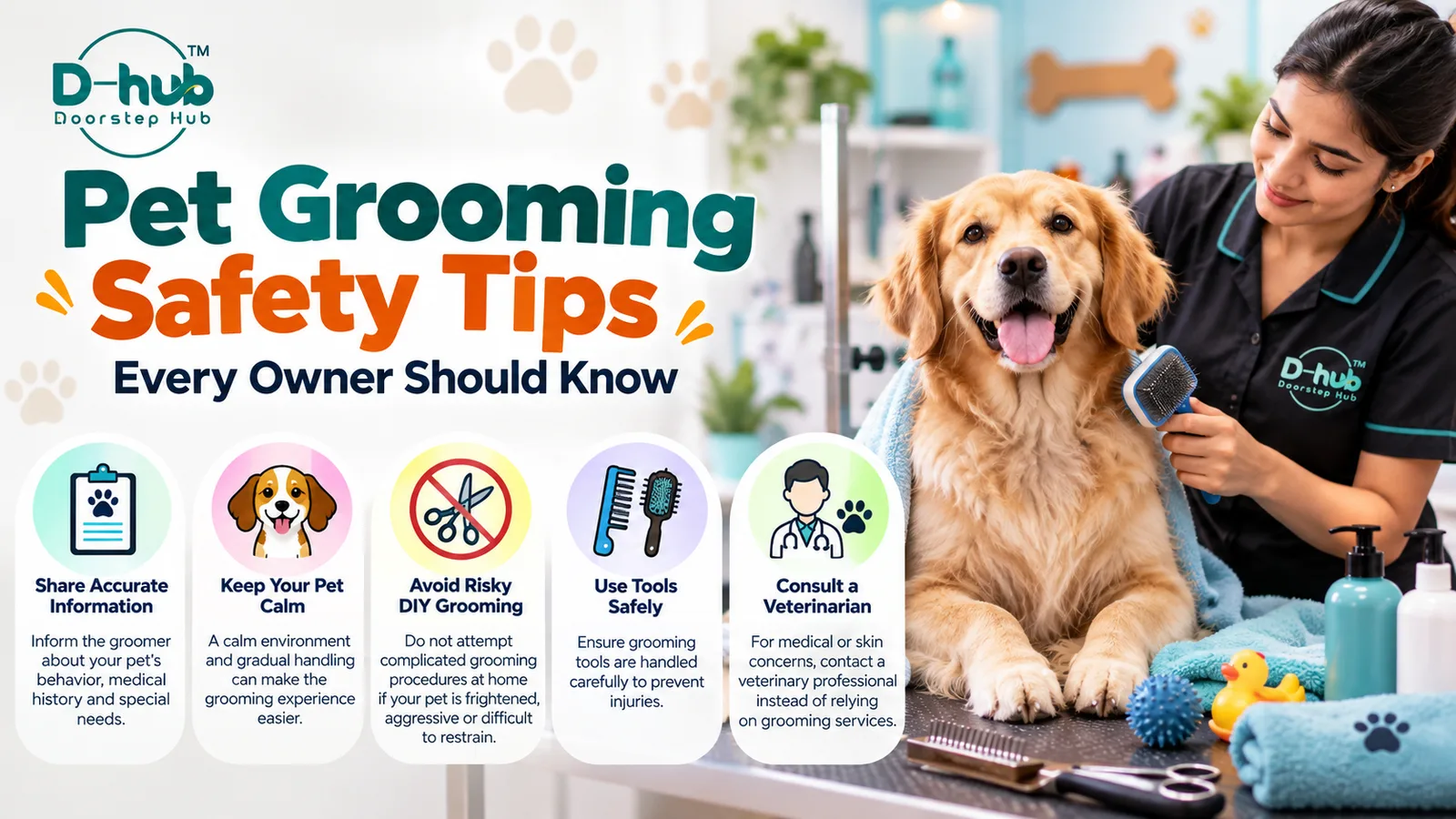
When preparing your pet for grooming, share accurate information with the professional, supervise handling carefully, and avoid attempting complicated procedures at home when the situation may be unsafe.
1. Share Accurate Information About Your Pet
Before grooming begins, provide relevant information about your pet.
This may include:
- Breed
- Age
- Size
- Coat type
- Coat condition
- Temperament
- Previous grooming experience
- Sensitive areas
- Known handling difficulties
Accurate information can help the groomer understand how to approach the service more appropriately.
2. Explain Your Pet’s Temperament
Tell the groomer how your pet usually responds to handling.
For example, mention if your pet is:
- Calm
- Nervous
- Easily startled
- Highly energetic
- Uncomfortable with restraint
- Protective of certain areas
- Difficult to handle during grooming
Do not hide behavioral concerns that may affect safety.
3. Supervise Preparation Carefully
If you are preparing your pet before a professional grooming appointment, keep the process calm and controlled.
Basic preparation may include:
- Securing your pet appropriately
- Keeping grooming information ready
- Checking coat condition
- Preparing a leash or carrier
- Creating a clean working area for at-home services
Avoid stressful last-minute handling if your pet is already anxious.
4. Avoid Complicated Grooming When Your Pet Is Frightened
Do not attempt difficult grooming procedures if your pet is highly frightened or resisting strongly.
This may include procedures such as:
- Extensive clipping
- De-matting
- Nail trimming on an uncooperative animal
- Grooming around sensitive facial areas
- Handling badly tangled fur
- Using unfamiliar powered grooming tools
A frightened pet may move suddenly, which can increase the risk of accidental injury.
5. Take Extra Care With Aggressive Behaviour
If your pet growls, snaps, attempts to bite, or reacts aggressively during grooming, stop and reassess the situation.
Do not force the animal to continue simply to finish the grooming task.
Aggressive behaviour can create risks for:
- The pet
- The person grooming
- Other people nearby
A qualified groomer may be better able to determine whether the service can continue safely.
6. Avoid Grooming Injured Areas
If your pet has a visible injury, do not groom directly over the area without appropriate guidance.
This may include:
- Cuts
- Wounds
- Swelling
- Tender areas
- Recent injuries
- Healing skin
Inform the groomer before the service begins.
For injuries requiring medical assessment, consult a veterinary professional.
7. Be Careful With Skin Irritation
Visible skin irritation may require more than routine grooming.
Watch for signs such as:
- Redness
- Persistent scratching
- Rash-like areas
- Open sores
- Swelling
- Hair loss
- Unusual discharge
A groomer may notice these concerns, but medical evaluation should come from a qualified veterinary professional.
8. Handle Grooming Tools Carefully
Grooming tools should always be used carefully and for their intended purpose.
Common tools may include:
- Brushes
- Combs
- Clippers
- Scissors
- Nail trimmers
- De-shedding tools
Avoid using sharp or powered tools if you are not confident handling them safely.
Sudden pet movement can make some grooming procedures risky.
9. Use Pet-Appropriate Equipment
Use grooming tools and products designed for pets where applicable.
Avoid improvised tools that may:
- Pull the coat
- Cut the skin
- Cause irritation
- Become caught in fur
- Frighten the animal
If you are unsure which tool is appropriate for your pet’s coat, ask a qualified groomer.
10. Do Not Rush Through Matting
Severely tangled or matted fur can be difficult to manage safely.
Trying to pull or cut through matting without proper technique may:
- Cause pain
- Pull the skin
- Create cuts
- Increase stress
- Make the pet harder to handle
Significant matting may be better handled by an experienced groomer.
11. Be Careful Around Sensitive Areas
Take additional care when grooming around:
- Eyes
- Ears
- Mouth
- Paws
- Tail
- Belly
- Skin folds
These areas can be more sensitive and may require controlled handling.
If your pet strongly resists, do not force the procedure.
12. Stop if Your Pet Becomes Extremely Distressed
Watch for signs that your pet is no longer tolerating grooming safely.
These may include:
- Panic
- Continuous struggling
- Persistent attempts to escape
- Snapping
- Biting attempts
- Extreme trembling
- Strong defensive behavior
If the animal becomes extremely distressed, stop the grooming process and allow the pet to settle.
13. Avoid Unsafe Restraint
Do not use excessive force to keep a pet still for grooming.
Improper restraint may increase:
- Fear
- Stress
- Defensive behavior
- Risk of injury
If your pet cannot be handled safely, seek professional assistance rather than forcing the procedure.
14. Keep the Grooming Area Safe
Whether grooming at home or preparing for a visiting professional, use a stable and suitable area.
The space should ideally be:
- Clean
- Well lit
- Free from unnecessary clutter
- Away from obvious escape routes
- Appropriate for the pet’s size
Avoid unstable tables or slippery surfaces that could cause falls.
15. Keep Sharp Tools Secure
Scissors, clippers, nail trimmers, and similar tools should be stored securely when not in use.
Do not leave sharp equipment where:
- Pets can reach it
- Children can access it
- It can fall
- It may be stepped on
Good tool management is an important part of grooming safety.
16. Know When Professional Grooming Is More Appropriate
Professional assistance may be more suitable if your pet:
- Has severe matting
- Is very anxious
- Shows aggressive behavior
- Is difficult to restrain
- Requires extensive trimming
- Has complicated coat-care needs
- Has had previous grooming difficulties
Avoid turning a complicated grooming task into a risky home procedure.
17. Contact a Veterinarian for Medical Concerns
Grooming is not a substitute for veterinary care.
Seek veterinary guidance for concerns such as:
- Persistent skin irritation
- Open wounds
- Significant swelling
- Severe pain
- Suspected infection
- Sudden hair loss
- Unusual lumps
- Other health-related symptoms
Medical conditions should be assessed by an appropriate veterinary professional.
18. Follow Professional Guidance
If a groomer or veterinarian advises that a particular grooming step should be delayed or avoided, follow that guidance.
The safest approach may sometimes be to:
- Stop the grooming session
- Reschedule
- Use a gentler service
- Seek veterinary assessment first
Completing every grooming step should not take priority over safety.
Why Safe Grooming Practices Matter
Pet grooming involves close handling, sharp tools, powered equipment, and sensitive body areas.
Safe practices can help:
- Reduce accidental injuries
- Lower unnecessary stress
- Protect sensitive areas
- Avoid unsafe restraint
- Identify when professional help is needed
- Prevent grooming from worsening a medical concern
The goal is to keep grooming appropriate for your pet’s comfort, condition, and behaviour.
Practice Safer Pet Grooming with Doorstep Hub
When preparing for a Doorstep Hub pet grooming service, share accurate information about your pet and supervise preparation appropriately.
Avoid attempting complicated grooming procedures at home if your pet is frightened, aggressive, injured, or difficult to restrain.
Handle grooming tools carefully, stop if the situation becomes unsafe, and consult an appropriate veterinary professional when medical or skin concerns require clinical attention.
Need Help with Your Doorstep Hub Pet Care Booking?
📞 Helpline: 8886688666
🌐 Website: doorstephub.com
📲 Download the Doorstep Hub App
Safe handling, appropriate tools, and knowing when to seek professional help can make pet grooming more manageable for both you and your pet.
Frequently Asked Questions
Common troubleshooting questions answered by our specialists
Was this article helpful?
Your feedback helps us improve our repair guides and service tips.