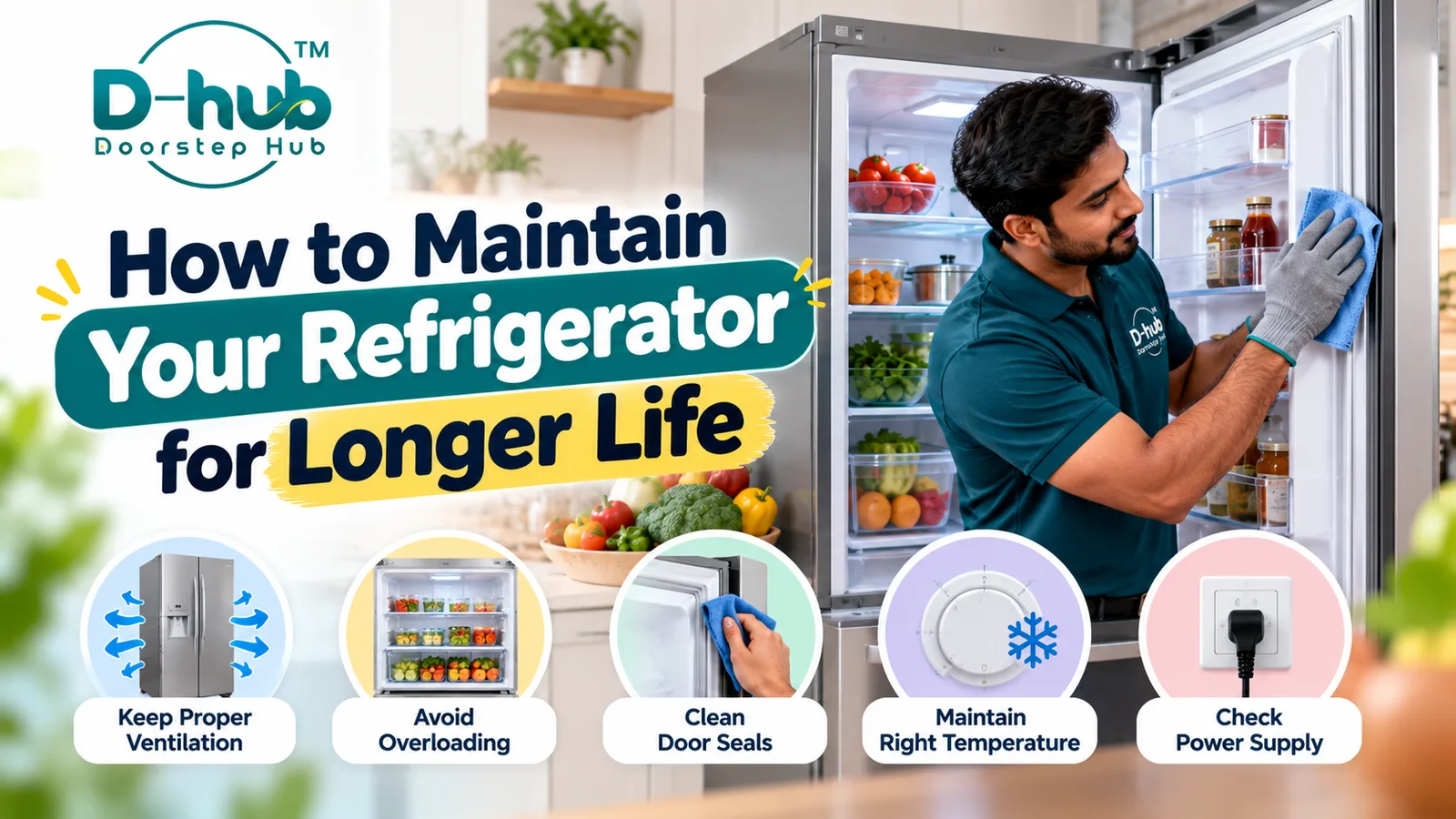
A refrigerator is one of the few home appliances that operates continuously throughout the day to keep food, vegetables, beverages, dairy products, and other perishables at appropriate temperatures. Because it works for long hours every day, simple maintenance habits can help maintain cooling performance, support efficient operation, and reduce avoidable problems. Dust buildup, overcrowded shelves, blocked air vents, dirty door seals, incorrect temperature settings, and poor ventilation around the appliance can all affect normal refrigerator operation over time.
Regular refrigerator care does not need to be complicated. Keeping the appliance clean, arranging food correctly, maintaining adequate ventilation, and paying attention to changes in cooling or operating sounds can make a meaningful difference. Doorstep Hub brings you these practical refrigerator maintenance tips to help keep your appliance working reliably for longer.
Why Is Refrigerator Maintenance Important?
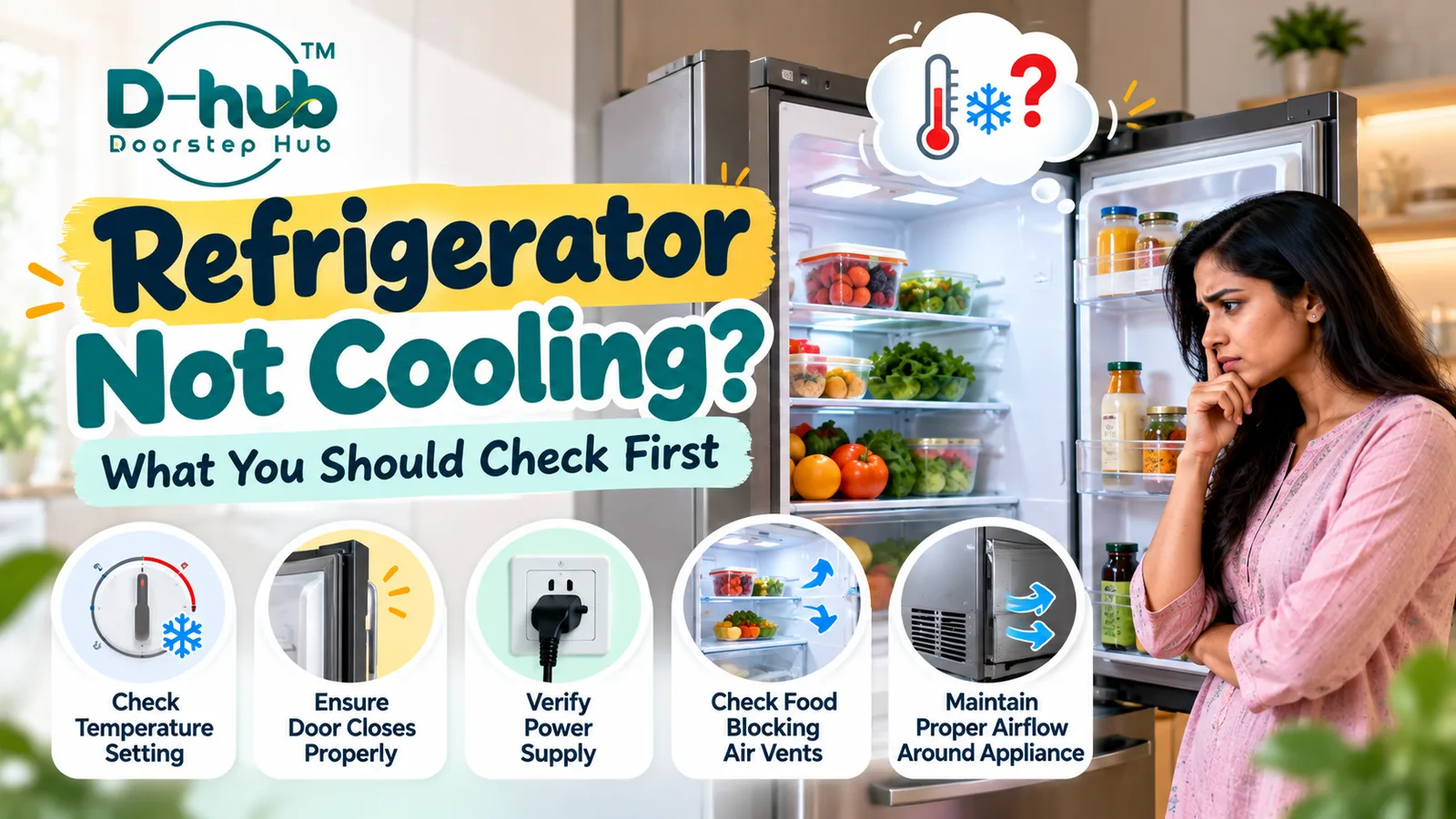
Your refrigerator depends on proper airflow, temperature control, door sealing, electrical power, and cooling components to maintain a stable internal environment.
Regular maintenance can help you:
- Maintain consistent cooling
- Support proper internal airflow
- Reduce unnecessary strain on the appliance
- Keep food-storage areas cleaner
- Prevent excessive dust and dirt buildup
- Maintain effective door sealing
- Identify developing problems earlier
- Reduce avoidable refrigerator breakdowns
- Maintain overall refrigerator performance
- Support a longer useful appliance life
A few simple habits can help prevent common maintenance-related problems.
1. Keep Enough Ventilation Around the Refrigerator
Refrigerators release heat while operating and need appropriate space around the appliance for ventilation.
Placing a refrigerator too close to walls, cabinets, or other objects may restrict airflow around the unit.
For Better Ventilation
- Follow the manufacturer's recommended clearance.
- Avoid tightly enclosing the refrigerator.
- Keep surrounding ventilation areas unobstructed.
- Avoid placing items against external ventilation openings.
- Keep the appliance away from excessive heat where practical.
Adequate ventilation helps the refrigerator release heat during normal operation.
2. Avoid Overloading Refrigerator Shelves
Filling every available space inside the refrigerator can interfere with the circulation of cold air.
When containers, bottles, or food packages block internal vents, some areas may not cool as effectively as others.
Better Food Storage Practices
- Avoid tightly packing every shelf.
- Leave space around internal air vents.
- Arrange containers so air can circulate.
- Avoid placing food directly against ventilation openings.
- Make sure drawers and shelves close properly.
Organized storage can help maintain more consistent airflow throughout the refrigerator.
3. Keep Internal Air Vents Clear
Many refrigerators circulate cold air through vents positioned inside the refrigerator or freezer compartments.
Blocking these vents can affect temperature distribution.
Check periodically that food packages, containers, or other items have not been pushed directly against ventilation openings.
If your refrigerator continues to have uneven cooling even when vents are clear, professional inspection may be necessary.
4. Clean Refrigerator Door Seals
Door seals, also known as gaskets, help keep cold air inside the refrigerator.
Food residue, dirt, and other buildup around the gasket may interfere with proper door closure.
Basic Door-Seal Care
- Wipe the gasket gently with an appropriate soft cloth.
- Remove visible food residue.
- Check for obvious cracks or damage.
- Make sure containers are not preventing the door from closing.
- Confirm that the door closes securely.
A damaged or poorly sealing gasket may require professional assessment or replacement.
5. Maintain the Recommended Temperature
Setting the refrigerator unnecessarily cold does not always improve food storage and may cause the appliance to operate differently than intended.
Follow the manufacturer's recommended temperature settings for your particular refrigerator model.
Check the control panel occasionally to make sure settings have not been changed accidentally.
If the refrigerator cannot maintain the selected temperature despite correct settings, a technical problem may require diagnosis.
6. Clean Spills Promptly
Food and liquid spills should be cleaned as soon as practical.
Allowing spills to remain inside the refrigerator can lead to stains, unpleasant odours, and unnecessary buildup around shelves, drawers, and storage compartments.
When cleaning:
- Switch off the appliance when required by the manufacturer's instructions.
- Use appropriate cleaning materials.
- Avoid harsh chemicals unless approved for the appliance.
- Dry cleaned surfaces appropriately.
- Avoid allowing excessive water near electrical components.
Regular interior cleaning helps maintain a cleaner food-storage environment.
7. Check the Refrigerator Power Cable and Plug
Periodically inspect accessible portions of the refrigerator's power cable and plug.
Look for obvious signs such as:
- Damaged cable insulation
- Loose plug connection
- Burn marks
- Excessive heat around the plug
- Damaged electrical socket
Do not attempt to repair damaged electrical wiring yourself.
If you notice burning smells, sparking, repeated electrical tripping, or visible cable damage, stop using the appliance if it is safe to do so and arrange appropriate professional assistance.
8. Avoid Opening the Refrigerator Door Unnecessarily
Every time the refrigerator door is opened, cold air can escape and warmer room air enters.
Frequently leaving the door open for extended periods can make the refrigerator work longer to restore its internal temperature.
Try to:
- Decide what you need before opening the door.
- Avoid leaving the door open unnecessarily.
- Close the door completely after use.
- Make sure containers do not prevent proper closure.
Simple usage habits can help maintain more stable internal temperatures.
9. Pay Attention to Unusual Refrigerator Noises
Refrigerators naturally produce operating sounds as fans, compressors, and other components switch on and off.
However, a sudden change in sound may deserve attention.
Consider professional inspection if you notice:
- Unusually loud buzzing
- Grinding sounds
- Repeated clicking
- Excessive vibration
- New or persistent unusual noises
Do not dismantle internal components in an attempt to locate a mechanical or electrical sound.
10. Don't Ignore Changes in Cooling Performance
Weak or inconsistent cooling can indicate a maintenance or technical problem.
Watch for symptoms such as:
- Refrigerator not cooling properly
- Freezer not freezing as expected
- Uneven temperatures
- Food spoiling sooner than expected
- Excessive frost
- Refrigerator running for unusually long periods
- Repeated power cycling
- Unusual noises
- Error codes
If basic checks such as temperature settings, door closure, ventilation, and internal airflow do not resolve the issue, professional diagnosis may be required.
When Should You Call a Refrigerator Technician?
Consider professional refrigerator inspection when:
- Cooling becomes noticeably weaker
- The refrigerator stops cooling
- The appliance repeatedly switches on and off
- Unusual noises continue
- Excessive frost repeatedly develops
- The door does not seal correctly
- Electrical problems appear
- The refrigerator runs continuously
- Error codes appear
- Basic maintenance does not resolve the problem
A trained technician can inspect relevant components such as fans, sensors, thermostats, electrical controls, cooling components, and the compressor to determine the actual cause.
Professional Refrigerator Service Support with Doorstep Hub
Routine cleaning and proper refrigerator usage can help reduce avoidable maintenance problems, but internal electrical, mechanical, and refrigeration-system repairs should be handled by trained professionals.
If your refrigerator requires inspection, maintenance, troubleshooting, cleaning, or repair assistance, Doorstep Hub can help you connect with service professionals.
Whether you are experiencing weak cooling, unusual noises, excessive frost, repeated power cycling, airflow problems, door-seal issues, or another refrigerator fault, timely diagnosis can help prevent an existing problem from becoming more serious.
Need Refrigerator Service or Repair Support?
📞 Helpline: 8886688666
🌐 Website: doorstephub.com
📲 Doorstep Hub App: Open Doorstep Hub App
Frequently Asked Questions
Common troubleshooting questions answered by our specialists
Was this article helpful?
Your feedback helps us improve our repair guides and service tips.