A refrigerator door that does not close or seal properly can affect the appliance’s ability to maintain a consistent internal temperature. When warm room air continuously enters through gaps around the door, the refrigerator may need to operate for longer periods to maintain cooling. You may notice weak cooling, condensation, excessive frost, food not staying sufficiently cold, or the refrigerator running more frequently than usual. In many cases, the problem may be caused by something simple, such as a food container blocking the door, dirty rubber seals, overloaded door shelves, or incorrect appliance positioning.
However, persistent refrigerator door problems can also be related to a damaged door gasket, worn hinges, door misalignment, or other mechanical issues. Doorstep Hub brings you this practical guide to understanding why your refrigerator door may not close properly, what you can safely check at home, and when professional refrigerator repair assistance may be required.
Why Is My Refrigerator Door Not Closing Properly?
A refrigerator door depends on correct alignment and an effective gasket seal to keep cold air inside the appliance.
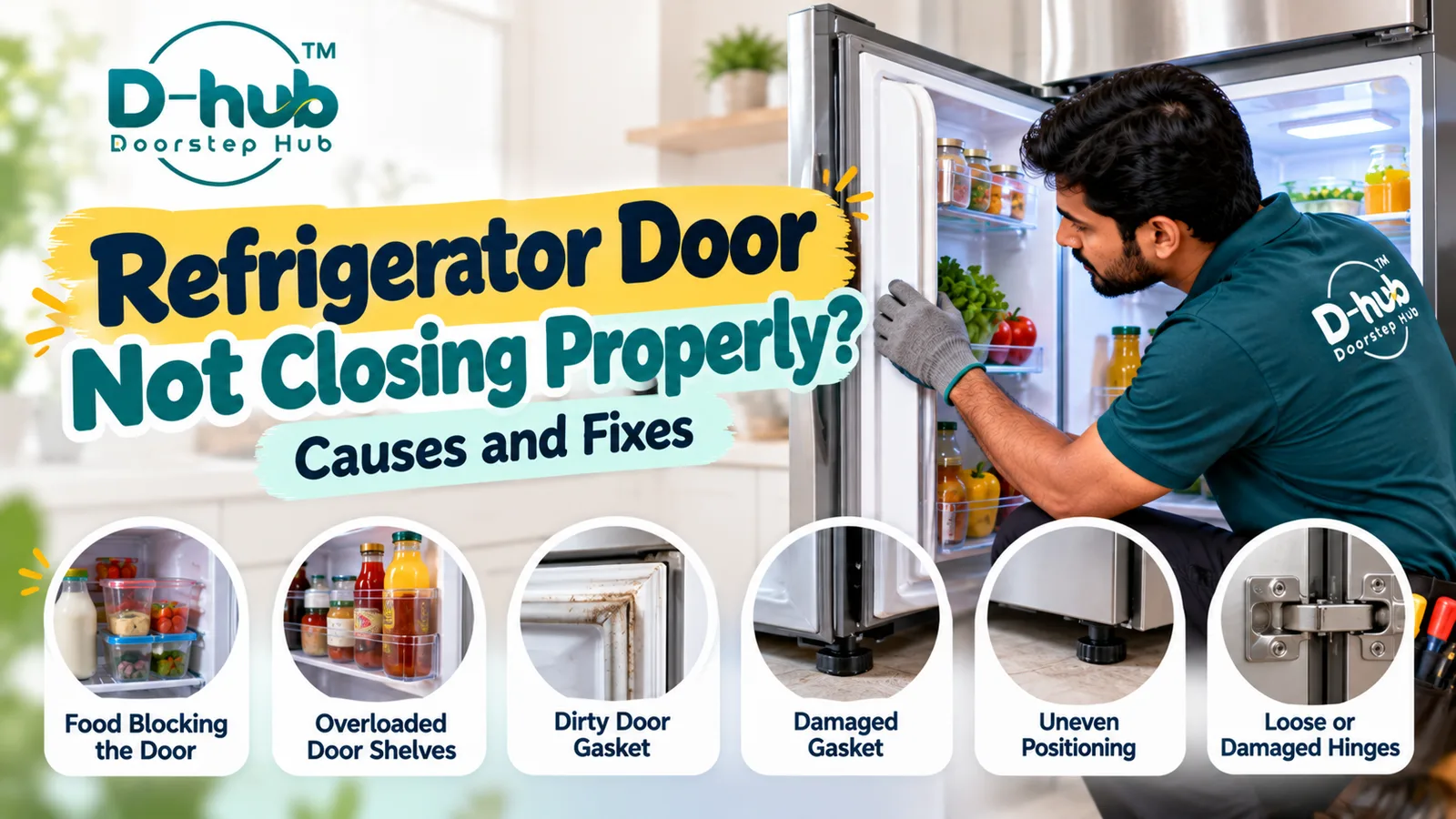
Common causes of refrigerator door-closing problems include:
- Food packages blocking the door
- Overloaded door shelves
- Dirty refrigerator door gasket
- Torn or damaged gasket
- Refrigerator not positioned correctly
- Door misalignment
- Loose or damaged hinges
- Shelves or drawers incorrectly positioned
- Objects trapped around the door seal
Start with simple checks before assuming that the refrigerator requires a major repair.
1. Check for Food Blocking the Refrigerator Door
One of the first things to check is whether a food container, bottle, packet, shelf, or drawer is preventing the door from closing completely.
Look carefully around the inside of the refrigerator.
Make sure:
- Containers are fully inside the shelves.
- Bottles are not extending beyond door shelves.
- Drawers are completely closed.
- Food packages are not trapped near the gasket.
- Shelves are correctly positioned.
Rearranging the contents may solve the problem immediately.
2. Avoid Overloading the Door Shelves
Refrigerator doors often contain shelves for bottles, containers, sauces, and other frequently used items.
Excessive weight on these shelves may affect door operation in some situations.
Avoid overloading the refrigerator door and distribute food appropriately throughout the appliance.
If the door appears to sag or remain misaligned even after reducing the load, the hinges or alignment may require inspection.
3. Inspect the Refrigerator Door Gasket
The rubber seal around the refrigerator door is commonly known as the door gasket.
Its purpose is to create a seal between the door and refrigerator cabinet when the door is closed.
Check the gasket for:
- Food residue
- Dirt buildup
- Cracks
- Tears
- Loose sections
- Visible deformation
A damaged gasket may allow cold air to escape even when the door appears closed.
4. Clean the Refrigerator Door Seal
Dirt and sticky food residue can prevent the gasket from making proper contact with the refrigerator cabinet.
Clean the accessible gasket gently according to the manufacturer's recommendations.
A basic cleaning method may involve:
- Wiping away loose dirt.
- Using a soft cloth with mild soap and water when appropriate.
- Cleaning around the gasket carefully.
- Removing sticky residue.
- Drying the seal after cleaning.
Avoid harsh chemicals or abrasive cleaning materials that could damage the rubber.
5. Check Whether the Refrigerator Is Positioned Correctly
Improper appliance positioning may sometimes affect how the refrigerator door closes.
Make sure the refrigerator stands securely and does not rock excessively.
Follow the manufacturer's installation and leveling instructions for your refrigerator model.
Do not attempt major mechanical adjustments unless you understand the appliance's installation requirements.
6. Check the Refrigerator Door Alignment
Look at the refrigerator from the front and check whether the door appears correctly aligned with the cabinet.
Possible signs of an alignment problem include:
- One side of the door sitting lower than the other
- Uneven gaps around the door
- Door rubbing against another surface
- Door requiring excessive force to close
- Gasket not contacting the cabinet evenly
Persistent misalignment may require professional adjustment.
7. Damaged Hinges Can Affect Door Closure
Refrigerator hinges support the weight of the door and allow it to open and close correctly.
Over time, hinge components may become loose, worn, or damaged.
Possible signs include:
- Door sagging
- Door moving unusually
- Difficulty closing
- Uneven alignment
- Unusual movement while opening the door
Because refrigerator doors can be heavy, hinge repairs should be performed carefully.
Professional assistance may be appropriate when a hinge appears damaged.
8. Why Is Proper Door Sealing Important?
A properly closing refrigerator door helps maintain the required internal temperature.
When the seal is incomplete, warm air may continuously enter the refrigerator.
This can contribute to:
- Reduced cooling performance
- Longer operating cycles
- Condensation
- Moisture buildup
- Excessive frost in some situations
- Food-storage temperature problems
- Increased energy use
Addressing door-sealing problems early can help maintain normal refrigerator operation.
9. What If Cleaning the Gasket Doesn't Fix the Problem?
If the refrigerator door still does not close properly after cleaning the gasket and removing obstructions, inspect the visible seal for damage.
The problem may involve:
- Torn gasket
- Deformed seal
- Door misalignment
- Damaged hinge
- Incorrect appliance positioning
- Mechanical door components
A technician can inspect these areas and determine whether adjustment, gasket replacement, hinge repair, or another service is required.
10. Avoid Forcing the Refrigerator Door Closed
Repeatedly forcing a refrigerator door closed is not a proper solution.
Excessive force may place unnecessary stress on:
- Hinges
- Door components
- Gasket
- Shelves
- Internal containers
Instead, identify what is preventing the door from closing normally.
If there is no obvious obstruction and the door remains misaligned, arrange professional inspection.
When Should You Call a Refrigerator Technician?
Consider professional refrigerator repair assistance when:
- The door repeatedly opens after being closed
- The gasket is torn or damaged
- The refrigerator door is visibly misaligned
- Hinges appear loose or damaged
- The door is sagging
- Cold air appears to escape around the door
- Condensation repeatedly forms near the seal
- Cooling performance has decreased
- Excessive frost develops
- Cleaning and rearranging food do not solve the problem
A trained technician can inspect the door gasket, hinges, alignment, mounting components, and overall door condition to identify the appropriate repair.
Professional Refrigerator Door Repair with Doorstep Hub
If your refrigerator door does not close or seal correctly, Doorstep Hub can help you connect with service professionals for refrigerator inspection, maintenance, troubleshooting, and repair assistance.
Whether the problem involves a dirty gasket, damaged refrigerator seal, door misalignment, worn hinges, improper positioning, or another door-related issue, professional diagnosis can help determine the appropriate solution.
Correcting refrigerator door problems can help maintain cooling performance, reduce unnecessary cold-air loss, and support normal refrigerator operation.
Need Refrigerator Repair Support?
📞 Helpline: 8886688666
🌐 Website: doorstephub.com
📲 Doorstep Hub App: Open Doorstep Hub App
Frequently Asked Questions
Common troubleshooting questions answered by our specialists
Was this article helpful?
Your feedback helps us improve our repair guides and service tips.