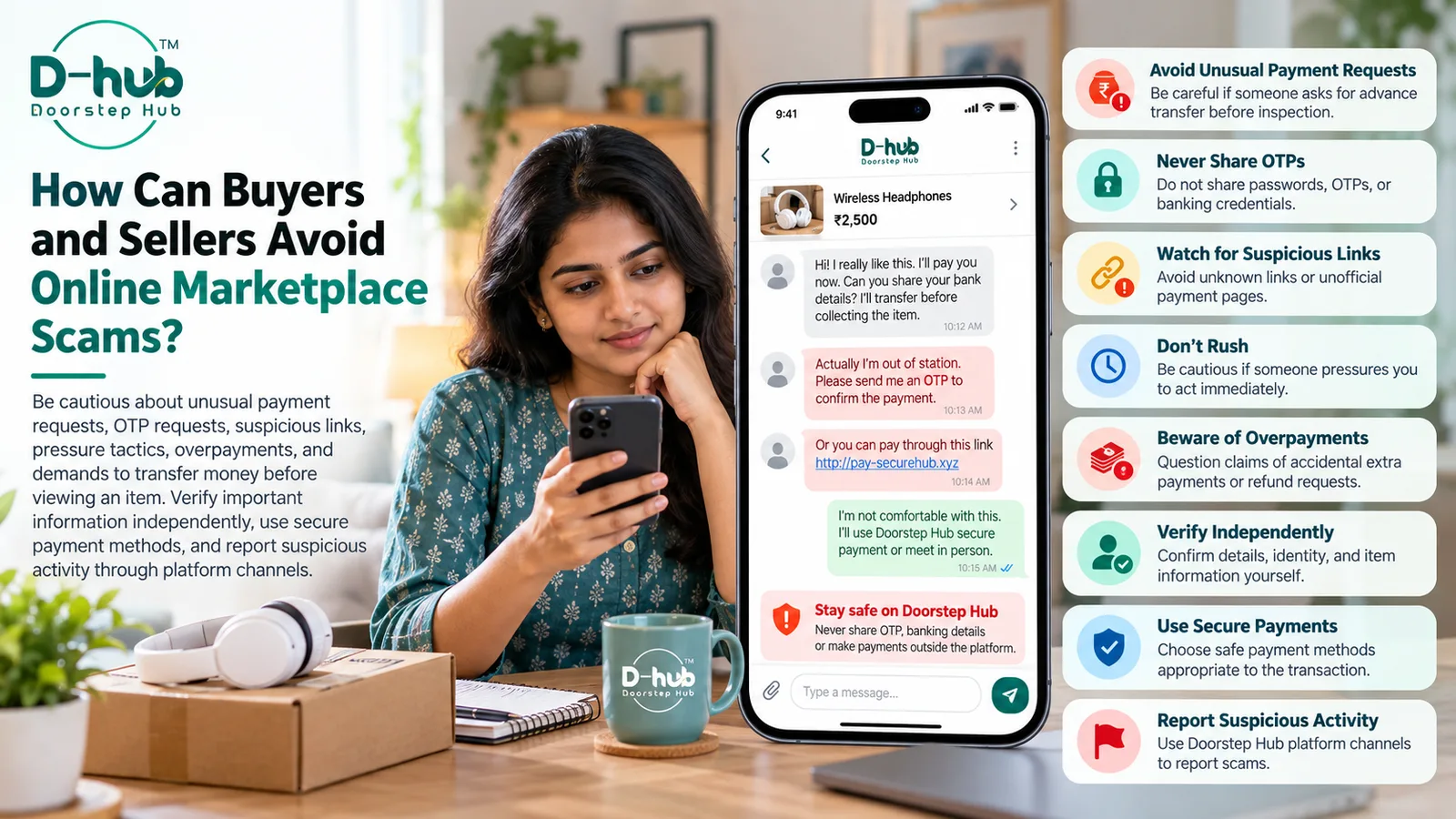
Online Buy & Sell platforms make it easier for buyers and sellers to connect, but every transaction should be approached carefully. Suspicious payment requests, fake links, unusual urgency, overpayment claims, or requests for sensitive information can all be warning signs.
When using Doorstep Hub Buy & Sell, take time to verify important information, protect your account details, and use appropriate payment methods before completing a transaction.
1. Be Careful With Unusual Payment Requests
Take extra care if a buyer or seller asks you to use an unfamiliar or unusual payment method.
Be cautious if someone asks you to:
- Transfer money before you have reviewed the item
- Pay an unexpected processing fee
- Send money to a different person or unrelated account
- Use an unfamiliar payment website
- Pay a deposit without clear information
- Complete a transaction outside the normal discussion
Before making any payment, make sure you understand exactly what you are paying for and who is receiving the money.
2. Never Share OTPs
An OTP is a private security code used to verify account activity or financial transactions.
Never share an OTP with a buyer, seller, or any unknown person.
Also avoid sharing:
- Login verification codes
- Banking verification codes
- Account recovery codes
- Authentication messages
- Security PINs
A genuine transaction should not require you to reveal private authentication codes to another person.
3. Protect Your Passwords and Banking Credentials
Do not share sensitive account or financial information during a Buy & Sell conversation.
Never provide:
- Account passwords
- Internet banking passwords
- UPI PINs
- ATM PINs
- Credit or debit card PINs
- CVV numbers
- Security answers
- Other confidential login information
Keep these details private even if someone claims they are required to send or receive money.
4. Be Cautious With Suspicious Links
Do not automatically trust links sent through messages.
A suspicious link may ask you to:
- Sign in to an unfamiliar website
- Enter payment information
- Confirm your banking details
- Provide an OTP
- Download an unknown application
- Claim a payment
- Verify your identity on an unrelated website
Before opening or using a link, check whether the destination appears legitimate and relevant to the transaction.
Avoid entering sensitive information on unfamiliar pages.
5. Watch for Pressure to Act Immediately
Be cautious if someone repeatedly pressures you to complete a transaction quickly.
Warning signs may include statements such as:
- “Pay immediately or the item will be gone.”
- “Send the OTP now.”
- “You must complete this in the next few minutes.”
- “Do not contact anyone else.”
- “Transfer the money before asking questions.”
A legitimate buyer or seller should normally allow reasonable time to review important details.
Do not let urgency prevent you from verifying the transaction.
6. Be Careful With Overpayment Claims
Overpayment situations can be suspicious.
For example, someone may claim that they accidentally sent more money than required and ask you to return the difference.
Before sending any money back:
- Verify whether the original payment was actually received
- Check your own payment or banking records
- Do not rely only on screenshots
- Do not trust messages claiming that money is “pending”
- Avoid sending a refund until the payment is independently confirmed
Screenshots, messages, or edited payment confirmations should not be treated as proof that money has actually reached your account.
7. Verify Payments Independently
Always check payments through your own trusted payment application, bank account, or official payment provider.
Do not rely only on:
- Screenshots
- SMS messages forwarded by another person
- Images of transaction receipts
- Verbal claims
- Emails from unfamiliar addresses
Confirm whether the payment has actually been credited before handing over an item or returning money.
8. Be Careful With Requests to Pay Before Viewing an Item
For transactions where inspection is practical, be cautious if you are asked to transfer significant money before seeing or verifying the item.
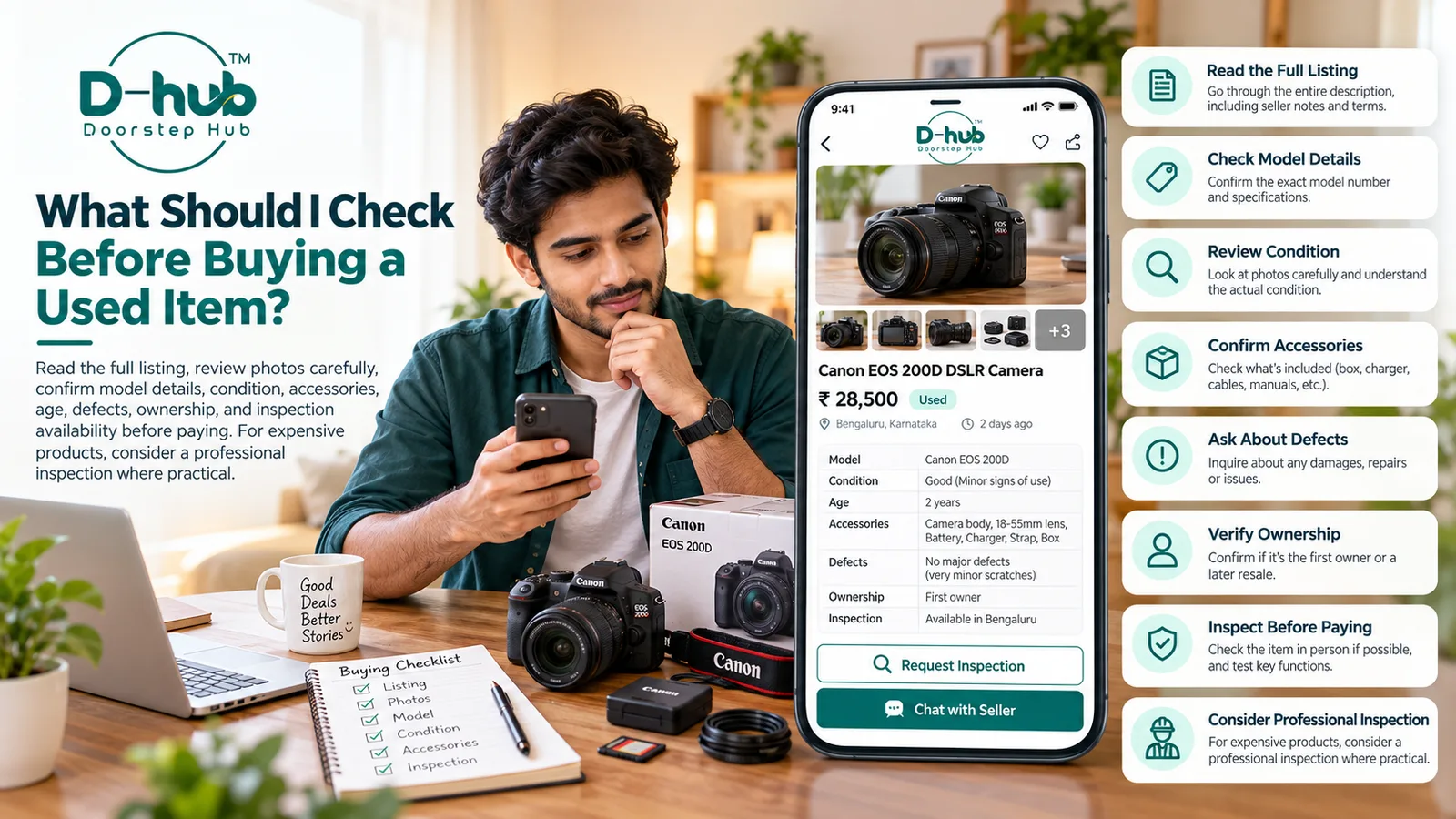
Before paying, consider checking:
- The actual product
- Model and specifications
- Condition
- Accessories
- Ownership information where relevant
- Known defects
- Seller details
- Whether inspection is available
For expensive products, additional verification may be appropriate.
9. Check Whether the Listing Information Is Consistent
Compare the seller's messages with the original listing.
Look for inconsistencies involving:
- Product model
- Price
- Condition
- Location
- Accessories
- Ownership
- Photos
- Reason for sale
If important details keep changing, ask for clarification before proceeding.
10. Be Cautious With Prices That Appear Unusually Low
A very low price does not automatically mean a listing is fraudulent, but it may justify additional checking.
Compare the asking price with:
- Similar used products
- Current market value
- Item condition
- Product age
- Included accessories
If the offer appears unusually different from comparable listings, verify the details carefully.
11. Inspect the Item When Practical
If the type of product allows it, consider inspecting the item before completing payment.
Inspection can help you:
- Confirm the item exists
- Check its condition
- Verify the model
- Test important functions
- Review accessories
- Identify visible defects
For high-value or technically complex products, professional inspection may also be appropriate where practical.
12. Use Appropriate Payment Methods
Choose a payment method that is suitable for the type and value of the transaction.
Before paying:
- Confirm the recipient details
- Verify the amount
- Check whether you are sending or receiving money
- Read payment-screen instructions carefully
- Never enter a UPI PIN merely to receive money
- Avoid unfamiliar payment pages or applications
Take additional care with large-value transactions.
13. Do Not Trust Payment Screenshots Alone
A screenshot can be altered, outdated, or unrelated to the current transaction.
If someone says payment has been completed, verify it independently using your own account or payment application.
Do not release an item simply because another person shows you a screenshot.
14. Avoid Sharing Unnecessary Personal Information
Keep conversations focused on the transaction.
Avoid sharing unnecessary information such as:
- Account passwords
- Identity-document details unless legitimately required
- Banking credentials
- Private authentication information
- Personal information unrelated to the sale
Only share information that is reasonably necessary for the transaction.
15. Stop the Transaction if Something Appears Suspicious
You are not required to continue a transaction if the situation becomes unclear or suspicious.
Consider stopping if:
- You are asked for OTPs
- Payment information does not match
- Someone sends suspicious links
- The buyer or seller is aggressively pressuring you
- Important listing details keep changing
- You are asked to pay unexpected fees
- Payment claims cannot be independently verified
Take time to verify the situation before deciding whether to proceed.
16. Report Suspicious Activity
If available, use Doorstep Hub's reporting or support channels to report suspicious listings, messages, or activity.
When reporting an issue, provide useful information such as:
- Listing details
- Relevant messages
- Screenshots where appropriate
- Description of the suspicious activity
Do not include passwords, OTPs, PINs, or other sensitive credentials in a report.
Why Scam Awareness Matters
A few basic precautions can help buyers and sellers reduce unnecessary risk during online marketplace transactions.
Safe transaction practices can help:
- Protect account information
- Reduce payment-related risks
- Identify suspicious behavior
- Prevent misunderstandings
- Encourage better verification
- Support safer buyer-seller communication
The most important approach is to verify important information independently and avoid rushing into transactions that you do not fully understand.
Buy and Sell More Carefully with Doorstep Hub
When using Doorstep Hub Buy & Sell, be cautious about unusual payment requests, OTP requests, suspicious links, urgent pressure, unexpected overpayments, and requests to transfer money before verifying an item.
Use appropriate payment methods, independently confirm important information, and report suspicious activity through the available Doorstep Hub channels.
Need Help with Doorstep Hub Buy & Sell?
📞 Helpline: 8886688666
🌐 Website: doorstephub.com
📲 Download the Doorstep Hub App
Careful verification and secure handling of personal and payment information can help create a safer Buy & Sell experience.
Frequently Asked Questions
Common troubleshooting questions answered by our specialists
Was this article helpful?
Your feedback helps us improve our repair guides and service tips.